
Not every guitar needs a treble bleed circuit. I don’t include them by default in my builds, not because they aren’t useful, but because they’re a choice. Like any part of a guitar’s wiring, they affect how the instrument responds, and whether or not they’re right for you depends on how you play.
This post is here to explain what a treble bleed circuit does, how it works, and when it might be worth adding to your guitar.
The Problem: Tone Loss When Rolling Back Volume
If you’ve ever turned down your guitar’s volume and noticed your tone getting muddy or dull, you’ve experienced a common side effect of passive guitar wiring. As the volume drops, high frequencies tend to fall off, especially with audio taper pots, high-output pickups, or clean amp settings.
For some players, this isn’t a problem. If you mostly play at full volume or use your tone knob to shape brightness, you might never notice it. But if you ride the volume knob to control gain, clean up fuzz, or dial in dynamics, losing clarity can be frustrating.
What a Treble Bleed Circuit Does
A treble bleed circuit is a small mod that helps preserve high frequencies as you lower the volume. It’s usually made from a capacitor, or a capacitor and resistor combo, wired across the input and output lugs of the volume pot.
It doesn’t boost anything, it just lets high frequencies “bleed through” the pot’s resistance, keeping your tone more consistent across the sweep.
Common Configurations
There are a few ways to wire a treble bleed and each one feels different under your hand.
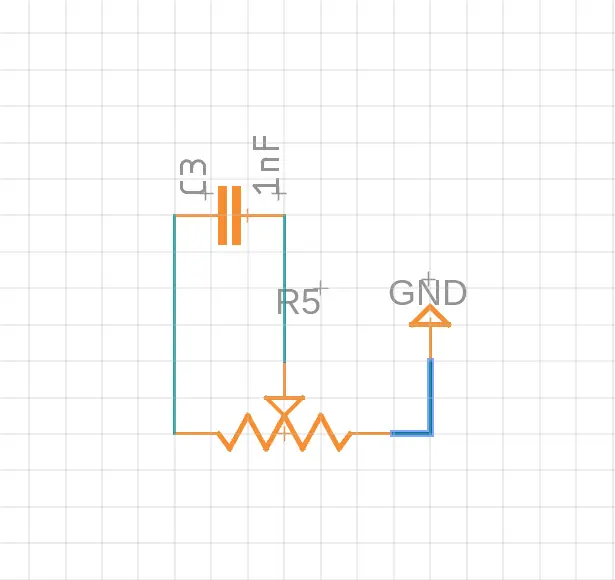
A capacitor alone is the simplest approach — direct and effective at preserving highs, but it can make the volume taper feel abrupt, like the volume jumps rather than rolls off smoothly. It works well with linear taper pots or for players who want a sharp, immediate response.
Capacitor + Resistor in Parallel
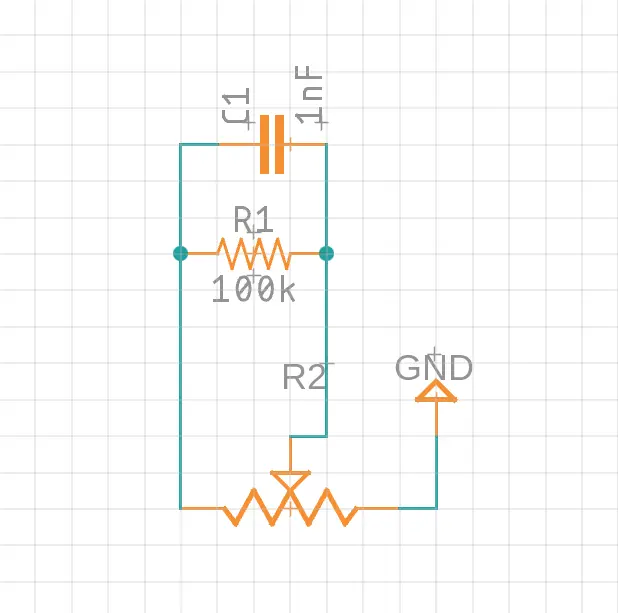
Adding a resistor in parallel smooths that out. The volume sweep feels more gradual and natural, and the tone stays consistent across the whole range. This is the version I reach for most often when a build calls for a treble bleed — it's the most balanced of the three for general playing.
Capacitor + Resistor in Series
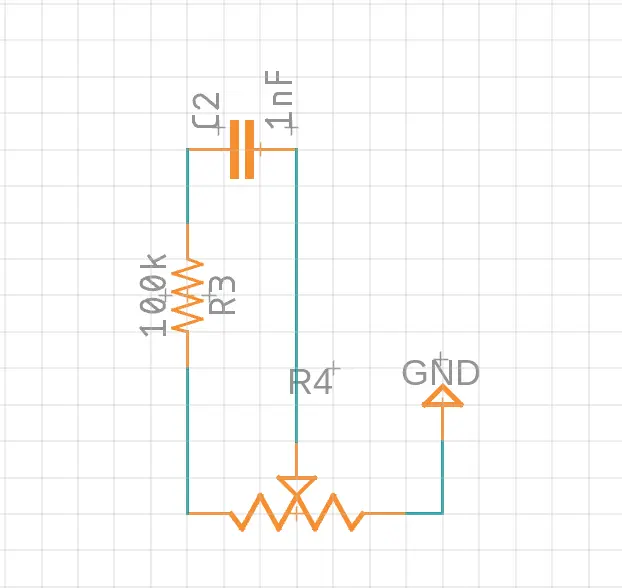
A resistor in series gives you a slightly mellower result. It tames some of the brightness at lower volumes which can be useful if the parallel version feels too sharp or present for a particular pickup and pot combination.
When You Might Want One
You don't need a treble bleed just because it's popular. But if you ride your volume knob to clean up overdrive or fuzz, play clean tones that need to stay clear at lower volumes, or find your tone gets too dark when you roll back — it's worth trying. If none of that describes how you play, you probably don't need one. That's why I don't include them by default.
What’s Next
In the next post, I’ll break down the specific treble bleed modules I offer, including the values and configurations. Whether you’re installing one yourself or ordering a pre-soldered kit, you’ll know exactly what to expect.
(edit 4/12/26)