
If you’ve picked out a treble bleed circuit and want to install it, this post walks through the basics. Whether you’re adding one to an existing guitar or wiring a new build, the process is straightforward and a good opportunity to fine-tune how your volume control behaves.
This isn’t a deep-dive into every wiring variation out there. It’s a practical guide based on how I wire guitars and how I build my soldered treble bleed modules.
What You’ll Need
Soldering iron and solder
Wire cutters/strippers
Heat-resistant tweezers or pliers
Your treble bleed circuit (pre-soldered or loose components)
A clean workspace and good lighting
If you’re working on a finished guitar, you’ll also need access to the control cavity and a way to remove the volume pot if needed.
Where It Goes
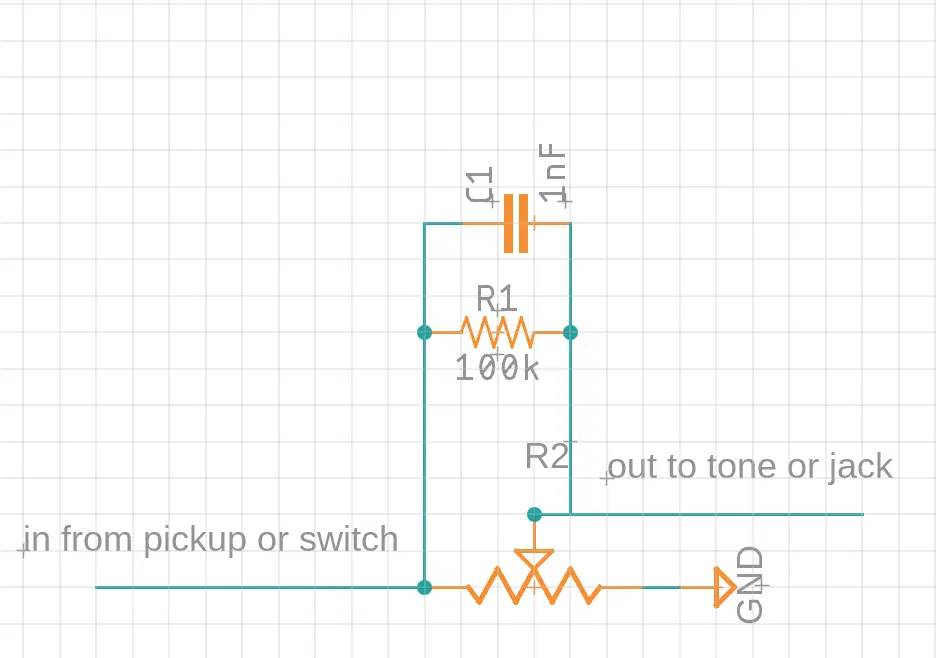
The treble bleed connects across the input and output lugs of the volume pot — one end to where the pickup signal enters, the other to where it exits toward the output jack or tone circuit. It does not connect to ground.
If you’re unsure which lug is which, here’s a quick way to check:
With the pot removed, rotate the shaft and use a multimeter to find the lug that changes resistance — that’s the wiper (output)
The lug that stays connected to the pickup wire is the input
Installing the Circuit
Identify the correct lugs on the volume pot
Tin the lugs with a small amount of solder to make the connection easier
Position the treble bleed circuit so it spans the input and output lugs
Solder each lead to the appropriate lug
Check for clean joints and make sure the circuit isn’t touching anything else in the cavity
Test the sweep by plugging in the guitar and rolling the volume knob — you should hear more clarity at lower volumes
If you want to try different values first, you can temporarily connect the circuit with alligator clips before soldering.
Testing and Tweaking
Once installed, play through your usual rig and listen to how the volume knob behaves. If the taper feels too abrupt or the tone gets too bright, you might want to try a different value or switch between parallel and series configurations.
Final Thoughts
This small mod can make a big difference in how your guitar responds to volume changes. If you use your volume knob for more than just muting between songs, it’s worth exploring.
In the next post, I’ll go over how different values behave in more detail, including how they interact with pot types and pickup output, so you can dial in the feel that works best for your setup.